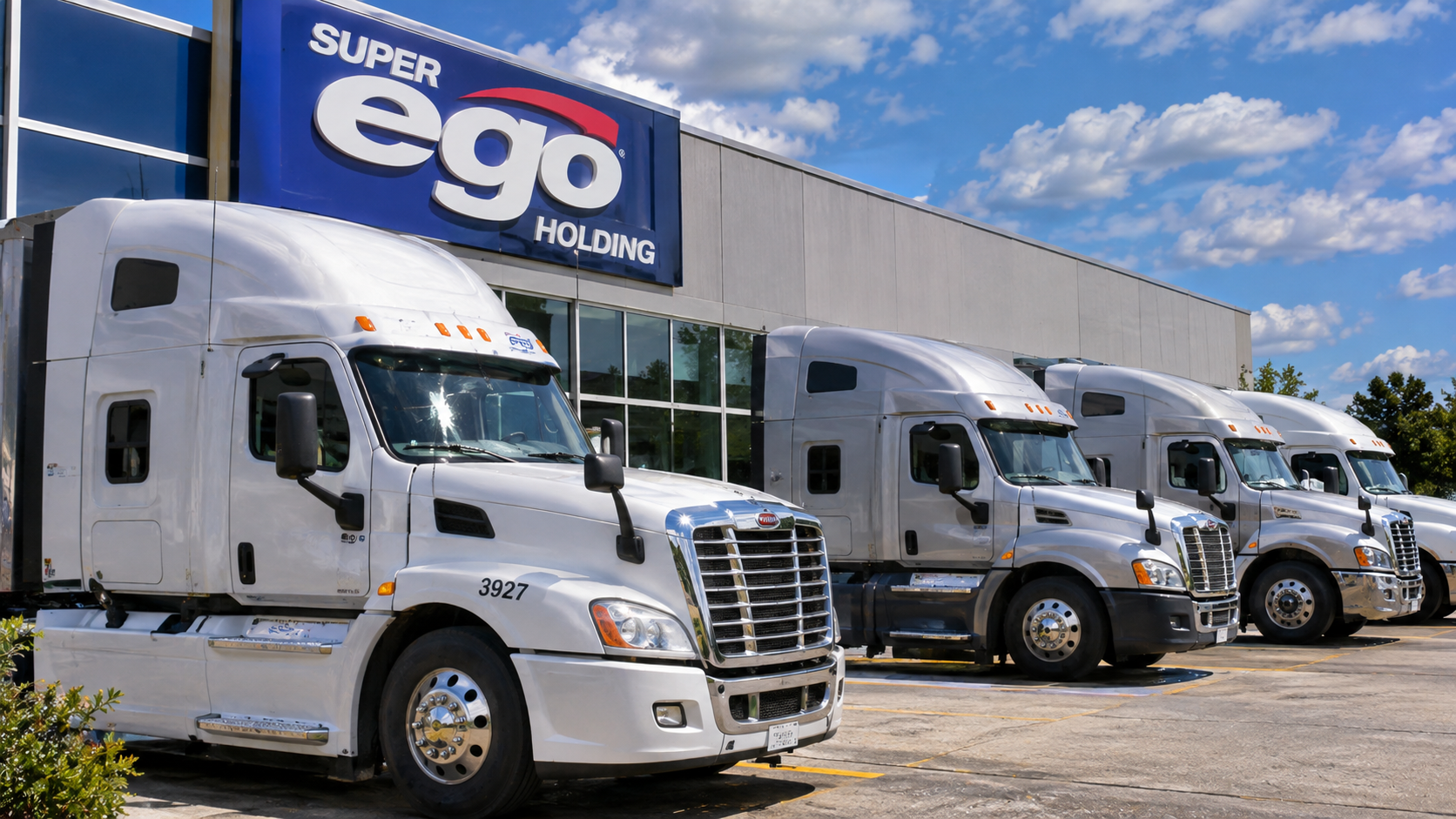
Super Ego Holding has announced new restrictions on truck leasing and rental agreements, effective November 1, 2026, that affect non-domiciled CDL holders, drivers with unresolved English-language proficiency violations, and motor carriers with Conditional federal safety ratings.
The changes also introduce stricter requirements for identifying which motor carrier actually operates leased equipment.
The announcement comes months after Super Ego became the subject of national investigative reporting concerning trucking safety, carrier relationships, and alleged regulatory violations.
While the company describes its new requirements as measures intended to strengthen safety and accountability, the changes could affect owner-operators and motor carriers seeking access to leased commercial equipment.
The restrictions are company policies, not new federal regulations.
What Is Changing Under Super Ego's New Leasing Policy?
According to Super Ego Holding's October 28 policy explanation and October 29 announcement, the company is introducing several new eligibility requirements for its equipment leasing and rental customers.
The announced changes include:
- Non-domiciled CDL holders: Owner-operators holding non-domiciled commercial driver's licenses will not qualify for new leasing or rental agreements.
- Carrier ownership: New applications from motor carriers whose owners hold non-domiciled CDLs or identification documents will be rejected under the company's stated policy.
- English-language proficiency: Owner-operators with unresolved English-language proficiency violations will not qualify for equipment agreements.
- Conditional safety ratings: Motor carriers holding a Conditional FMCSA safety rating will not qualify for new leases, renewals, or additional equipment.
- Operating carrier identification: Customers must identify the motor carrier responsible for operating the leased equipment.
- Carrier changes: Changes to the operating motor carrier require advance notification and approval.
- Existing customers: The new eligibility requirements apply when existing agreements come up for renewal or customers request additional equipment.
- Ongoing compliance: Certain violations of the new requirements during an agreement may result in termination.
These changes represent a more restrictive approach to customer eligibility and equipment oversight.
However, the company's announcement does not establish how many existing customers will be affected or how many applications have already been rejected under the new standards.
Non-Domiciled CDL Restrictions Go Beyond Federal Eligibility Requirements
One of the most significant provisions concerns drivers holding non-domiciled CDLs.
Federal law establishes eligibility requirements for non-domiciled commercial driver's licenses, and recent FMCSA regulatory changes have tightened those requirements.
However, qualifying non-domiciled CDLs have not been universally prohibited under federal law.
Super Ego's announced policy goes further by excluding non-domiciled CDL holders from the owner-operator equipment arrangements covered by its requirements.
This is an important distinction.
A driver may hold a credential that remains valid under applicable federal and state licensing requirements while still being ineligible for a particular company's leasing program.
Super Ego's decision does not invalidate a driver's CDL or establish a nationwide prohibition on non-domiciled CDL holders operating commercial motor vehicles.
Instead, it establishes eligibility restrictions for the company's own equipment agreements.
Conditional Safety Ratings Become a Leasing Disqualifier
Another significant change involves motor carriers with Conditional safety ratings issued by the Federal Motor Carrier Safety Administration.
Under FMCSA's safety-rating system, carriers may receive Satisfactory, Conditional, or Unsatisfactory ratings following applicable safety reviews.
A Conditional rating indicates that a carrier does not have adequate safety management controls to ensure compliance with applicable safety fitness standards.
However, a Conditional rating does not automatically prohibit a motor carrier from operating.
Super Ego's new policy makes that distinction particularly important.
The company has announced that Conditional-rated carriers will not qualify for new equipment agreements, renewals, or additional equipment.
As a result, a motor carrier that remains legally authorized to operate could nevertheless be denied access to equipment through Super Ego's leasing program.
The policy creates a private contractual standard that is more restrictive than the basic federal operating prohibition associated with an Unsatisfactory safety rating.
New Requirements Address Which Carrier Actually Operates the Truck
Super Ego is also requiring customers to identify the motor carrier responsible for operating leased equipment.
Under the announced requirements, customers must provide information identifying the operating carrier and obtain advance approval before changing that carrier.
This provision addresses an important issue in commercial trucking: the relationship between equipment ownership, leasing arrangements, motor-carrier operating authority, and the entity responsible for transportation operations.
A truck may be owned by one company, leased through another business, and operated under a separate motor carrier's authority.
Those arrangements can be legitimate, but they also require accurate identification of the responsible operating carrier.
The new Super Ego policy establishes a contractual process for reviewing changes in the operating entity.
Whether the company consistently enforces those requirements will depend on its actual screening and oversight procedures.
Super Ego Previously Faced National Investigative Scrutiny
The leasing announcement follows national attention involving Super Ego Holding and companies associated with its equipment leasing business.
In April 2026, CBS News' 60 Minutes aired an investigation examining alleged trucking safety problems, carrier identity changes, driver compensation practices, and electronic logging device concerns.
The investigation raised questions about relationships among trucking companies, equipment providers, and motor carriers operating under different business identities.
Some of the reporting focused on practices commonly associated with so-called chameleon carriers.
A chameleon carrier generally refers to a trucking operation that attempts to evade regulatory scrutiny or enforcement consequences by operating through a different business identity.
However, the existence of multiple affiliated businesses or a change in carrier identity does not, by itself, establish illegal conduct.
Super Ego disputed allegations concerning its role in motor-carrier operations.
The company has maintained that it operates as an equipment leasing business rather than a motor carrier responsible for dispatching freight or managing individual drivers.
Those distinctions are central to understanding the company's position and the questions raised by investigative reporting.
The allegations discussed in the CBS investigation should not be treated as established findings against every company or individual mentioned.
Questions About Super Ego's Current Operations
Additional reporting published October 30 by Overdrive examined Super Ego's operations following the new leasing announcement.
According to the report, a journalist visiting the company's Elmhurst, Illinois, location observed limited visible activity, blocked entrances, and equipment without conventional motor-carrier identification.
However, Super Ego's communications representative disputed suggestions that the business had ceased operating.
The representative stated that the company continued conducting business and serving more than 1,200 licensed motor-carrier customers.
The conflicting accounts do not establish that Super Ego has closed or discontinued its leasing business.
The company's reported customer count also has not been independently established through the information available for this article.
The October 30 reporting nevertheless adds context to the company's announcement and the continuing questions surrounding its operations.
Litigation and Allegations Remain Separate From the New Policy
Super Ego and related business operations have also been discussed in reporting concerning ongoing litigation.
Those matters include allegations involving driver compensation, working conditions, and business relationships among motor carriers.
The existence of a lawsuit does not establish that the allegations are true.
Any unresolved claims remain subject to the applicable legal process, and the announcement of new leasing standards does not constitute an admission of wrongdoing.
The new policies should therefore be evaluated on their stated requirements and actual implementation rather than treated as proof of the earlier allegations.
What Does This Mean for Owner-Operators?
For owner-operators considering equipment through Super Ego, the announced changes create several potential eligibility considerations.
Drivers holding non-domiciled CDLs may no longer qualify for new agreements under the company's stated restrictions.
Drivers with unresolved English-language proficiency violations may also be excluded.
Motor carriers with Conditional FMCSA safety ratings could face restrictions even when their federal operating authority remains active.
Existing customers may encounter the new requirements when seeking a renewal or additional equipment.
The operating-carrier identification requirement could also affect customers who change motor carriers during an equipment agreement.
However, the company has not published figures establishing how many owner-operators will lose access to equipment or how many existing agreements will be terminated.
There is also no verified basis to conclude that the new policy has already caused widespread equipment repossessions, freight disruptions, or driver displacement.
Those outcomes should not be assumed without supporting evidence.
A Broader Question About Truck Leasing and Accountability
The announcement highlights a recurring issue in commercial trucking: who is responsible for ensuring that equipment is operated by properly qualified drivers and compliant motor carriers?
Federal regulations establish responsibilities for motor carriers, commercial drivers, and equipment used in interstate transportation.
Private leasing companies may also establish contractual eligibility standards that exceed minimum federal requirements.
Super Ego's new approach places additional emphasis on the qualifications of equipment customers and the identity of the operating motor carrier.
The policy may provide the company with additional mechanisms to evaluate customer eligibility and respond to changes in carrier status.
Whether those mechanisms produce measurable safety or compliance improvements remains to be seen.
What Happens Next?
Super Ego announced that its updated leasing and rental requirements would take effect November 1, 2026.
The published policy establishes new restrictions for applicants, renewals, additional equipment requests, and certain ongoing customer arrangements.
However, independent reporting has not yet established how many customers have been affected or whether every announced screening requirement has been fully implemented.
For professional drivers and owner-operators, the immediate significance is that access to leased commercial equipment may depend on standards more restrictive than the minimum federal requirements for holding a CDL or maintaining motor-carrier operating authority.
For the trucking industry, the larger question is whether the new equipment oversight requirements will lead to greater transparency concerning the carriers and drivers actually operating leased trucks.
Truck Stop Talk will continue monitoring verified developments involving commercial truck leasing, driver qualifications, carrier safety ratings, and equipment accountability.
---
Sources
Super Ego Holding, October 28, 2026: Updated Lease and Rental Requirements
Super Ego Holding, October 29, 2026: Official Company Announcement via Business Wire
CBS News / 60 Minutes, April 2026: Investigation Into Trucking Safety and Carrier Operations
Overdrive, October 30, 2026: Super Ego Returns With New Leasing Restrictions
Federal Motor Carrier Safety Administration: Non-Domiciled CDL Final Rule FAQs