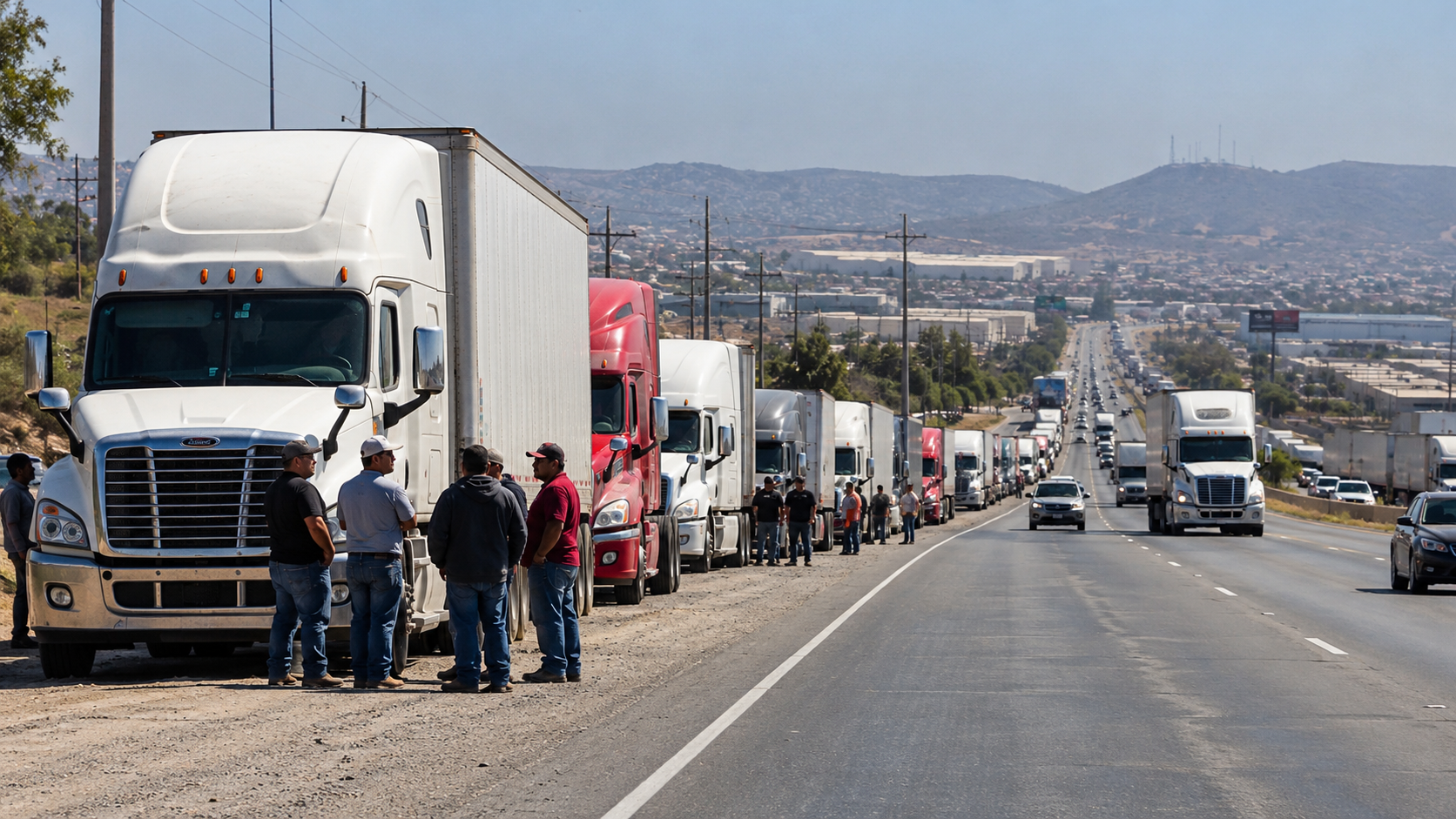
A nationwide trucking protest began across Mexico on Monday, October 26, disrupting major highways and reaching Nuevo Laredo, directly across the international border from Laredo, Texas.
Mexican transportation organizations launched the work stoppage over highway insecurity, cargo theft, extortion, rising operating costs, and proposed changes to transportation-related tax incentives.
Mexico's Interior Ministry, known as SEGOB, confirmed demonstrations at 38 locations across 19 Mexican states as of 9:30 a.m. Monday. The government's initial count included 691 vehicles and approximately 858 participants.
The protests have affected several important freight corridors, including routes serving industrial centers and the U.S.–Mexico border.
Although demonstrations have reached Nuevo Laredo, a shutdown of the international commercial bridges connecting Nuevo Laredo and Laredo has not been confirmed.
Trucking Demonstrations Reach Nuevo Laredo
Truck drivers and transportation organizations gathered along the Monterrey–Nuevo Laredo highway near kilometer 17 on Monday.
The demonstration involved members of several trucking organizations, including the National Chamber of Freight Transportation, known as CANACAR, along with HAMOTAC, FEMATRAC, and INDECO.
The Nuevo Laredo demonstration is particularly significant because of the city's role in cross-border freight transportation.
Commercial freight moving between Mexico and the United States relies heavily on the Laredo–Nuevo Laredo gateway, including shipments of automotive components, manufactured products, agricultural goods, and other commercial cargo.
Local reporting confirmed trucks gathering along the highway, while Tamaulipas authorities initially described plans for demonstrations that would leave traffic lanes open.
Subsequent reporting identified an obstruction near the Nuevo Laredo highway entrance.
The available information establishes a local roadway disruption, but not a complete shutdown of the international border crossing.
Mexican Government Confirms Protests in 19 States
According to Mexico's Interior Ministry, Veracruz recorded eight protest locations, followed by the State of Mexico with six. Nuevo León and Tlaxcala recorded three locations each.
The government confirmed a complete highway blockage at Tlaxco, Tlaxcala, along with partial closures in other locations in Tlaxcala and Veracruz.
Demonstrations were also reported along major highways connecting Mexico City with surrounding industrial and freight-distribution regions.
Other planned or reported protest locations included Reynosa, Monterrey, Tijuana, and several transportation corridors in northern and central Mexico.
The figures released by SEGOB represented a morning snapshot, not a final count for the day.
Later Monday, CANACAR disputed the government's assessment of the demonstrations, claiming that protests were taking place across all 32 Mexican states.
The competing figures have not been independently reconciled.
Why Mexican Trucking Organizations Are Protesting
The organizations behind the work stoppage have identified several longstanding concerns affecting freight transportation in Mexico.
Among their principal complaints are cargo theft, armed highway robberies, extortion, violence against truck drivers, excessive towing and impound charges, and deteriorating highway conditions.
The organizations are also challenging proposed changes to Mexico's 2027 fiscal measures, particularly provisions involving tax incentives associated with highway toll expenses.
Transportation representatives argue that these issues have increased the financial and operational pressures facing Mexican trucking companies.
The organizations announced the work stoppage as indefinite, with its duration dependent on developments in negotiations with federal authorities.
Government Negotiations Continue, but Organizations Remain Divided
Mexico's Interior Ministry has repeatedly called for dialogue with trucking organizations and urged participants to avoid blocking highways and interrupting commercial transportation.
By Monday evening, CANACAR had requested direct negotiations with Mexican President Claudia Sheinbaum rather than relying solely on meetings with the Interior Ministry.
CANACAR maintained that the industry's demands extend beyond taxation and include unresolved concerns about highway security and violence against truck drivers.
Meanwhile, other transportation organizations, including CANAPAT, CONATRAM, and ANTP, met with federal officials and agreed to continue discussions through a government working agenda.
Those organizations also expressed opposition to highway blockades.
The developments show that negotiations are underway, but not all transportation organizations are taking the same position on how the dispute should proceed.
No comprehensive agreement ending the demonstrations had been confirmed at the time of this report.
What This Means for U.S.–Mexico Freight
The immediate concern for U.S. freight operations is the possibility of delays affecting shipments moving through Mexican transportation corridors toward border crossings.
Nuevo Laredo is a major transfer and distribution point for commercial freight entering and leaving the United States.
Interruptions along the Monterrey–Nuevo Laredo corridor could affect truck arrival times, scheduled pickups, trailer transfers, and delivery appointments involving cross-border shipments.
However, the extent of those disruptions remains uncertain.
As of this report, there is no confirmed evidence of a complete shutdown of the Laredo–Nuevo Laredo international commercial bridges or a verified nationwide suspension of cross-border freight movements.
The protests are a transportation and supply-chain disruption, not a change to U.S. commercial-driver licensing, hours-of-service, or other federal trucking regulations.
What Happens Next
The trucking organizations have not announced a definite end date for the work stoppage.
Mexico's federal government is continuing discussions with transportation representatives, while demonstrations and highway conditions may change as negotiations proceed.
For U.S. carriers and freight operations involving Mexico, the developments to watch are confirmed highway closures, access to border freight facilities, changes to commercial bridge operations, and any agreement that formally ends the protests.
Truck Stop Talk will continue monitoring the situation, with further reporting if the disruption materially expands, international commercial crossings are affected, or an official resolution is announced.